

The Difference Between the Various Mechanical Keyboard Switches: Which Switch Is Best?
Mechanical keyboard switches, the heart of every Mechanical Keyboard, define typing feel, sound, and performance—much like the movement of an automatic mechanical watch dictates precision and character. From wireless keyboard gaming to productivity setups, here’s how switches differ and which suits your needs.
Key Switch Types Explained
-
Linear Switches (e.g., Red/Silver):
Smooth and quiet, ideal for wireless keyboard gaming where rapid keystrokes and minimal noise matter. Comparable to the seamless operation of a Quartz Watch, they prioritize speed over tactile feedback. -
Tactile Switches (e.g., Brown):
Feature a subtle bump, balancing typing accuracy and gaming responsiveness. Popular in Gaming RGB keyboard builds, they mirror the nuanced feedback of adjusting a Mechanical Watch crown. -
Clicky Switches (e.g., Blue):
Loud and tactile, favored by typists who enjoy auditory confirmation—akin to the satisfying tick of a automatic mechanical watch. Less common in Wireless Keyboard setups due to noise.
Factors to Consider
- Use Case: Gamers often prefer linear switches for speed, while tactile suits hybrid use. For OEM parts keyboard customization, switch choice aligns with personal preference, much like selecting Watch Accessories for style.
- Durability: Premium switches, crafted with CNC Machining Parts precision, offer 50M+ keystroke ratings—paralleling the longevity of luxury Mechanical Watch movements.
- Aesthetics: Gaming RGB keyboard enthusiasts may prioritize clear-housing switches for vibrant backlighting, similar to how automatic mechanical watch designs emphasize exhibition casebacks.
So, Which Switch Is Best?
There’s no one-size-fits-all answer. Gamers might lean toward linear switches for wireless keyboard gaming fluidity, while tactile strikes a balance for work-play rigs. Enthusiasts of OEM parts keyboard modding often experiment with niche switches, just as collectors curate Watch Accessories for individuality.
Ultimately, the “best” switch depends on your priorities: speed, feedback, or acoustics. Like choosing between a Quartz Watch (practicality) and a automatic mechanical watch (craftsmanship), it’s about aligning mechanics with lifestyle.
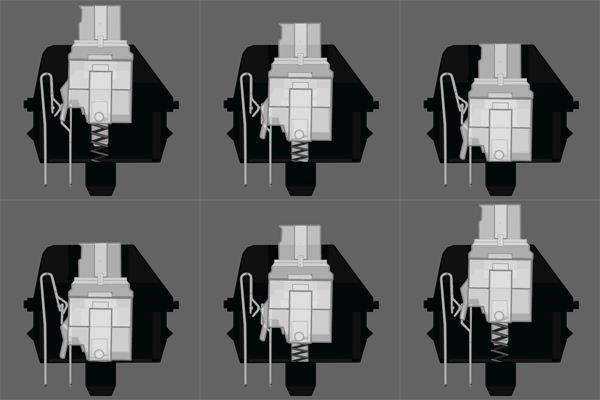
White shaft
Higher operating pressure grams than the Black Shaft
Stronger segmentation than the Tea Shaft
Discontinued
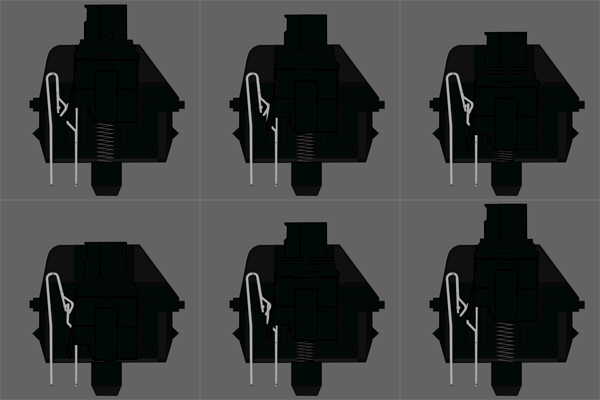
Black shaft
Operating pressure: 58.9g±14.7g
No segmentation sensation
Green Shaft
Operating Pressure: 58.9g±14.7g
Tactile Pressure: 58.9g±19.6g
Segmented feeling is very good
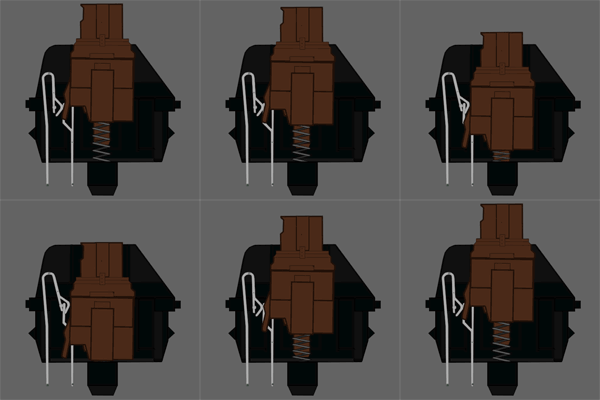
Tea Shaft
Operating pressure: 44.1g±14.7g
Tactile pressure: 54.0g±14.7g
Slight Segmentation
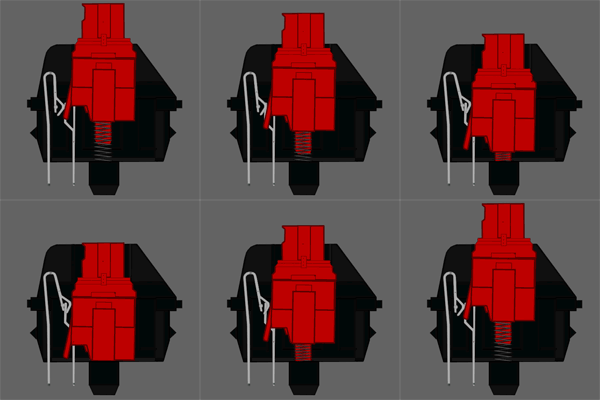
Red Shaft
Operating Pressure: 44.1g±14.7g
No Segmentation
*Yellow shaft--Ryber's own developed shaft, pressure 50g
PS: What is a mechanical keyboard's "feel"? It's hard to describe in words. If you slowly scroll the mouse wheel, you will feel a scale is slightly stuck, but if you slightly push, it will scroll over quickly. Keyboards have a similar feel to this. It's easy to understand after using a mechanical keyboard that has a sense of paragraphing.
What is the best axis for mechanical keyboards
The reason why there are various mechanical keyboard axes is so that users can find the right one for them.
The various gaming axes are applicable:
Black axis: suitable for playing games, typing (not recommended if finger power is too weak)
Green shaft: the most suitable axis for typing
Tea Shaft: for both typing and gaming, universal axis
Red Shaft: gaming, best for long time typing except Green Shaft
White shaft: for people who do a lot of text inputting.
Yellow shaft: gaming (currently the yellow shaft is used in the Rebel V7)
General opinion:
Gamers: Black Shaft > Tea Shaft > Red Shaft > Green Shaft
Office typing: green shaft > red shaft > tea shaft > black shaft
Warm tips:
If you do not know what axis to buy, generally buy the green axis or tea axis, will not be disappointed. The black shaft is under a lot of pressure, the red shaft has little character, and the white shaft is under even more pressure and discontinued.
Shaft is not the only factor that determines the mechanical keyboard, but also consider the keyboard design. For example, the F-key area is far away from the mechanical keyboard, it is not suitable for playing real-time strategy games, but play design, music class is very suitable. It is also claimed that 80% keyboards leave more room for gaming maneuvers and are better suited for drastic movements in intense games.
Extended Reading:
Cherr has some other special shafts
Green shaft: generally used for green shaft keyboards with space bar, the same as the green shaft, click sound and sense of paragraph.
Gray shaft: generally used for mechanical keyboards other than green shaft space keys, no paragraph feeling, the pressure is the most.
Odd shaft: Used for special switches.